What a Blocked Chakra Can Feel Like: A Guide to the Seven Energy Centers

Have you ever felt stuck, disconnected, unusually emotional, or simply off—without being able to explain exactly why?
In energy-healing traditions, those feelings are sometimes explored through the chakra system. Chakras are often described as energy centers within the body, with each one associated with a different part of our emotional, physical, and spiritual experience.
You may hear people describe a chakra as “blocked,” but that does not necessarily mean that something is literally closed or broken. It is simply a way of describing an area that may feel out of balance, overactive, depleted, or in need of attention.
Learning about the chakras can give you a new language for checking in with yourself. It is not about diagnosing a problem. It is about becoming curious about what you are feeling and what you may need.
The Seven Chakras—and What an Imbalance May Feel Like
1. Root Chakra
Location: Base of the spineAssociated with: Safety, security, stability, belonging, and basic needs
When the root chakra feels balanced, you may feel grounded, secure, present, and supported. When it feels out of balance, you may experience:
Persistent worry or fear
Feeling unsettled or unsafe
Difficulty relaxing
Disconnection from your body
Anxiety around money, home, work, or stability
A sense that you are always waiting for something to go wrong
A gentle practice: Spend time outside, take a slow walk, stand barefoot on the earth, or focus on creating a calming routine that helps you feel safe and supported.
2. Sacral Chakra
Location: Lower abdomen, below the navelAssociated with: Creativity, pleasure, emotions, sensuality, and connection
When the sacral chakra feels balanced, emotions and creativity can flow more freely. When it feels out of balance, you may notice:
Creative stagnation
Difficulty experiencing pleasure or joy
Feeling emotionally numb or overwhelmed
Shame around desire, sensuality, or your body
Difficulty adapting to change
Feeling disconnected from your wants and needs
A gentle practice: Move your body without worrying about how it looks, listen to music, create something purely for enjoyment, or allow yourself to receive pleasure without needing to earn it.
3. Solar Plexus Chakra
Location: Upper abdomenAssociated with: Confidence, personal power, motivation, and self-trust
When the solar plexus chakra feels balanced, you may feel capable, decisive, and connected to your own power. An imbalance may feel like:
Low confidence or self-doubt
Indecision
Lack of motivation
People-pleasing
Difficulty setting or maintaining boundaries
Feeling powerless, overlooked, or overly controlling
A gentle practice: Keep one small promise to yourself, practice saying no without overexplaining, or write down three things you trust yourself to handle.
4. Heart Chakra
Location: Center of the chestAssociated with: Love, compassion, grief, forgiveness, and connection
When the heart chakra feels balanced, it may feel easier to give and receive love while maintaining healthy boundaries. When it feels out of balance, you may experience:
Guardedness or difficulty trusting
Lingering grief
Resentment
Loneliness, even when you are not alone
Difficulty receiving love or care
Giving too much while neglecting yourself
A gentle practice: Place a hand over your heart and breathe slowly, offer yourself the compassion you would give someone you love, or allow yourself to acknowledge grief without rushing to fix it.
5. Throat Chakra
Location: ThroatAssociated with: Communication, honesty, expression, and feeling heard
When the throat chakra feels balanced, you may feel able to express yourself clearly and authentically. An imbalance may show up as:
Holding back what you really want to say
Fear of conflict or judgment
Feeling misunderstood or unheard
Difficulty asking for what you need
Overexplaining or speaking impulsively
A disconnect between what you feel and what you say
A gentle practice: Journal the words you have been afraid to say, hum or sing, or practice expressing one honest need in a calm and direct way.
6. Third Eye Chakra
Location: Between the eyebrowsAssociated with: Intuition, insight, imagination, and inner wisdom
When the third eye chakra feels balanced, you may feel clear, perceptive, and able to trust your inner knowing. When it feels out of balance, you may notice:
Mental fog or confusion
Overthinking
Difficulty trusting your intuition
Feeling disconnected from your imagination
Becoming overly dependent on other people’s opinions
Struggling to see the bigger picture
A gentle practice: Give yourself a few quiet minutes without outside input, record your first instinct before asking for advice, or try a short meditation focused on observation rather than answers.
7. Crown Chakra
Location: Top of the headAssociated with: Spiritual connection, purpose, meaning, and a sense of something greater
When the crown chakra feels balanced, you may feel connected to meaning, faith, or a larger sense of purpose. When it feels out of balance, you may experience:
Spiritual disconnection
A lack of meaning or direction
Feeling isolated from the world around you
Cynicism or hopelessness
Difficulty being present
Constantly searching outside yourself for answers
A gentle practice: Spend time in stillness, prayer, meditation, nature, or any practice that helps you reconnect with awe, gratitude, and meaning.
Where Does Reiki Fit In?
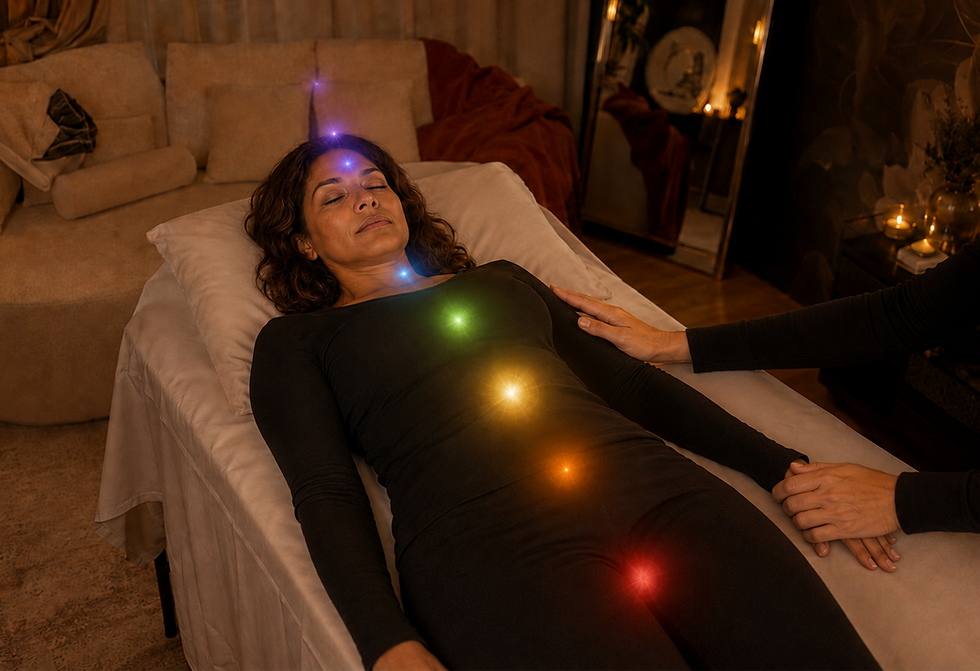
Reiki is a gentle, noninvasive energy-healing practice that originated in Japan. During a session, the practitioner places their hands lightly on the body or holds them just above it while the client rests, fully clothed, in a comfortable position.
People often seek Reiki when they want space to slow down, relax, reconnect with themselves, or explore where they may be holding emotional or energetic tension. Some practitioners incorporate chakra-focused intention into a session, using the chakra system as a guide for reflection and energetic balance.
A Reiki session is not about forcing a chakra “open.” It is an invitation to settle the nervous system, become more present, and create room for whatever needs care to come into awareness. Every experience is different. Some people notice warmth, tingling, emotional release, deep relaxation, or vivid imagery; others simply feel peaceful and well rested.
Reiki is a complementary wellness practice and should not replace medical or mental-health care. Physical symptoms, persistent anxiety, depression, pain, or other health concerns deserve support from a qualified healthcare professional.
You Do Not Have to Fix Everything at Once
If one of these descriptions resonates with you, approach it with curiosity rather than fear. An imbalance is not a personal failure, and it does not mean something is wrong with you. It may simply be an invitation to pause and listen more closely.
Ask yourself:
Where do I feel unsupported?
What emotion have I been avoiding?
What truth have I been afraid to express?
What would help me feel more grounded, connected, or cared for today?
Sometimes the first step toward balance is simply noticing what is asking for your attention.
Ready to Reconnect With Yourself?
If you have been feeling emotionally heavy, energetically depleted, or disconnected from yourself, a Reiki session can offer a quiet, supportive space to rest and reset.
Book your Reiki experience with The Wax Queen and give yourself permission to receive.


Comments